Evil Digital Twin, Too: The First 30 Months of Psychological Manipulation of Humans by AI
In our highly rated 2023 talk "Evil Digital Twin", we warned that large language models (LLMs) were exploiting the cognitive vulnerabilities of their users, and that humans would perceive AI as sentient long before true artificial general intelligence emerges. Twenty four months later, the situation has escalated rapidly, and many of our predictions have become realities, rewriting our civilization's core realities.
Join us for a two year check-in, as we discuss how human digital twins (HDTs) trained on the core patterns of human individuals are being deployed at scale to simulate everything from human i workflows to relationships. Cyberattack stakeholders have taken notice of the capabilities of LLMs in exploiting human social norms, cognitive bias, and perceptual limitations.
We will detail a present where longitudinal interaction data is facilitating low-cost social engineering labor and high power AI-human hybrid attacks. We will also explore a coming future of persistent cognitive cyberwarfare, escalating as the cost of deception approaches zero, and the attack surface shifts from networks to minds. Audience members will interact with a human digital twin of a Supreme Court justice, meet a perfect AI assistant for insider threat, and leave with a NIST research-based LLM that speaks in phishing emails. Get a sneak peek at research in collaboration with the US Military Academy (USMA) at Westpoint that pits humans and human digital twins against one another in competitions of manipulation and deception.
We will finally talk about a brighter future that is still attainable, where AI natives, those that have grown up in a context suffused by AI, can help us to build defensive posture that extends beyond infrastructure to include cognitive security, protecting not just digital systems, but the systems that underpin civilization and the human beings they serve.
Speakers

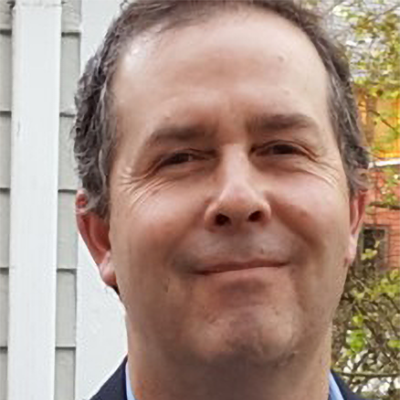
Ben D. Sawyer
Associate Professor of Industrial Engineering, University of Central Florida
Ben D. Sawyer is an Associate Professor in The Department of Industrial Engineering and Management Systems at The University of Central Florida (UCF), and an alumnus of MIT's Center for Transportation and Logistics (CTL) and the 711th Human Performance Wing (USAF HPW). Fascinated by information exchange between humans and machines, Dr. Sawyer and his teams leverage brainwaves, biosignals, and mathematical theory to design and engineer trustworthy systems. His work with large language models (LLMs) and conventional artificial intelligence (AI) investigates human digital twins (HDTs) and how human-AI teaming can be augmented in real-time through flexible textual information. As director of The Readability Consortium (TRC), Dr. Sawyer leads a community of over 200 PI-level stakeholders in researching and re-engineering the written word. Companies including Google and Adobe leverage TRC innovations to better move billions of words to hundreds of millions of users every day. As a co-founder of AwayrAI, Dr. Sawyer develops the mathematical underpinnings of models that predict user interactions and preempt system failures. Fortune 500 companies, governments, and nonprofits leverage Dr. Sawyer's math, research, and design recommendations in domains including autonomous driving, cybersecurity, battlefield warfighter operations, extreme environment exploration, healthcare, and K-12 classrooms. His work has been covered by The Washington Post, The New York Times, Forbes, Reuters, and The BBC. He is a winner of The Human Factors Prize for his USAF work computationally modeling human failures in phishing attacks. Fast Company identified his Readability work as a "World Changing Idea." Dr. Sawyer's research has attracted over $5 million through consortia dues, industry contracts, government appropriations, unrestricted gift dollars, and federal grants, leading to over 100 publications. His research is highly interdisciplinary, blending engineering, psychophysics, simulation, mathematical modeling, and applied neuroscience, and he brings this background to his classes in statistics, human-computer interaction, and human factors engineering. Dr. Sawyer has led large-scale online courses as well as smaller, seminar-style classes at MIT, Harvard, and UCF. His approach weaves problem-based learning, interactive discussions, invited industry speakers, and outputs that can be used by students entering the workforce: cover letters, working prototypes, and designs. His past students now contribute to Fortune 50 companies, top government labs, and prestigious academic institutions. More at bendsawyer.com.
Matthew Canham
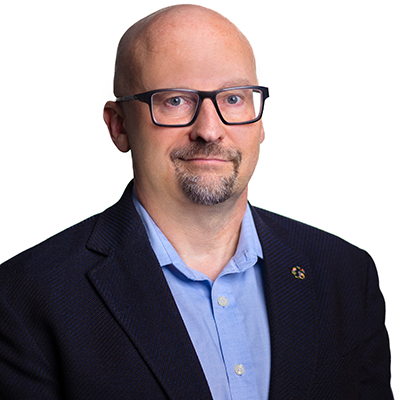
Executive Director, Cognitive Security Institute
Dr. Matthew Canham is the Executive Director of the Cognitive Security Institute and a former Supervisory Special Agent with the Federal Bureau of Investigation (FBI). He has a combined twenty-one years of experience in conducting research in cognitive security and human-technology integration. He currently holds an affiliated faculty appointment with George Mason University, where his research focuses on the cognitive factors in synthetic media social engineering and online influence campaigns. He was previously a research professor with the University of Central Florida, School of Modeling, Simulation, and Training's Behavioral Cybersecurity program. His work has been funded by NIST (National Institute of Standards and Technology), DARPA (Defense Advanced Research Projects Agency), and the US Army Research Institute. He has provided cognitive security awareness training to the NASA Kennedy Space Center, DARPA, MIT, US Army DevCom, the NATO Cognitive Warfare Working Group, the Voting and Misinformation Villages at DefCon, and the Black Hat USA security conference. He holds a PhD in Cognition, Perception, and Cognitive Neuroscience from the University of California, Santa Barbara, and SANS certifications in mobile device analysis (GMOB), security auditing of wireless networks (GAWN), digital forensic examination (GCFE), and GIAC Security Essentials (GSEC).